Hot stone sets: temperature, handling and what the warmer does

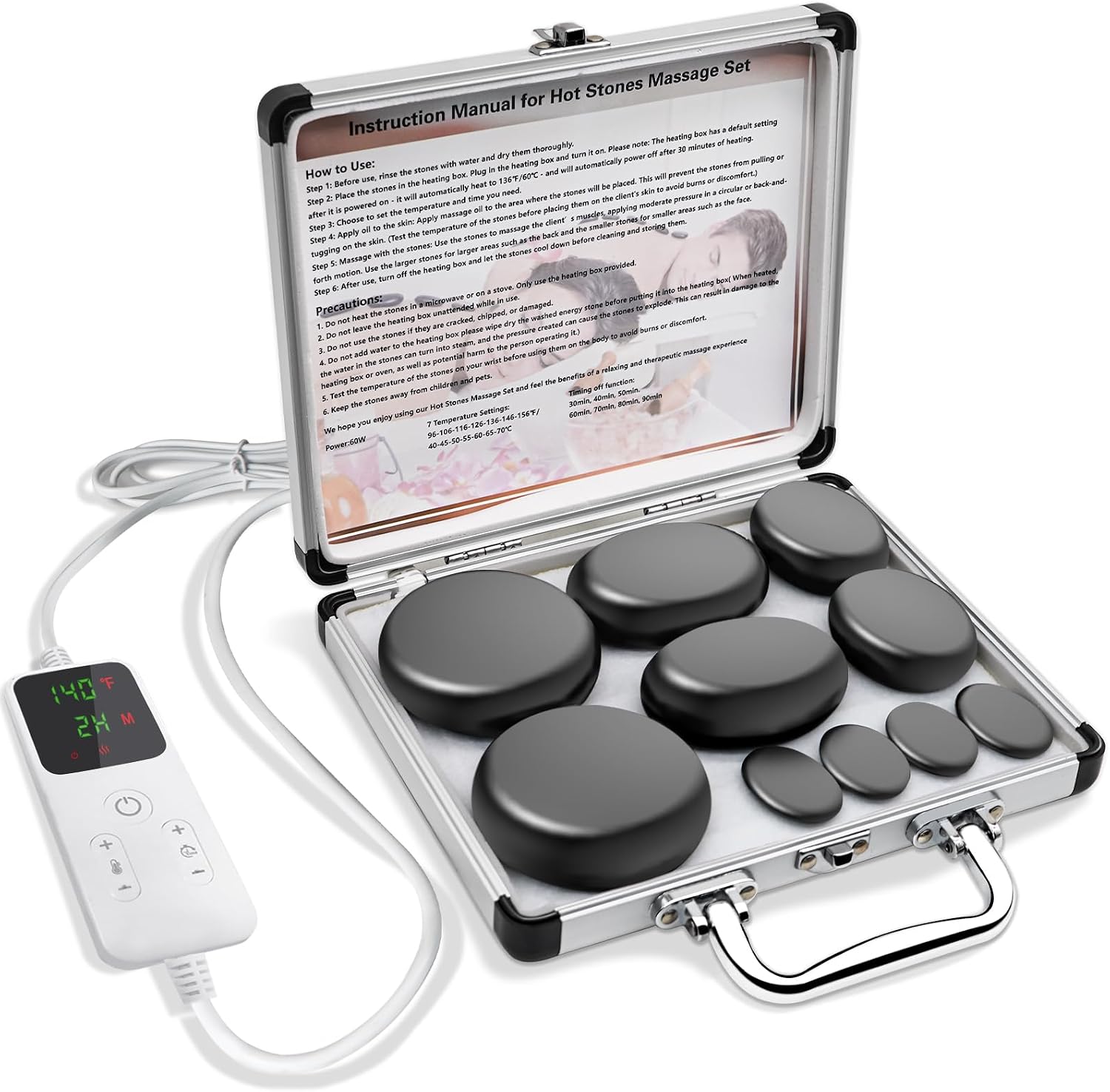
A hot stone set is two products: the stones, which are geologically simple and durable, and the warmer, which is an electrical appliance holding water at temperature for hours. Almost everything that matters in practice concerns the second one.
Why basalt and not another stone
Basalt is a dense volcanic rock with high heat capacity, meaning it absorbs a lot of energy and releases it slowly. That slow release is the whole point: a stone that gave up its heat quickly would be useless within a minute.
It is also non-porous when polished, which matters for cleaning between clients. Porous stone cannot be sanitised properly and should not be used on skin.
Set composition and why sizes vary
A set contains a range of sizes because they do different jobs: large stones for broad areas, small ones for hands, feet and between toes, and placement stones that sit still. A set of uniform stones is much less useful than the count suggests.
Where our listings give a count, they also state the size range, because ten mixed stones and ten identical ones are not the same product.
The warmer is the safety-critical part
It holds water at a set temperature for hours. Adjustable temperature control with a display is worth having over a simple on-off unit, because a fixed thermostat gives you whatever it was set to at the factory.
A warmer that cannot hold a stable temperature is a warmer to stop using. The failure mode is overheating, and stones taken from an overheated bath are genuinely dangerous.
Never test a stone on the client
Every stone is tested on your own inner forearm before it touches a client, every time, regardless of what the warmer display says. Stones at the bottom of a bath are hotter than those at the top and the display reads the water, not the stone.
Rotate stones between the bath and the table so that no single stone is at maximum temperature when it reaches skin.
Water level and heating time
Stones should be fully submerged, and a warmer takes a substantial time to bring a full load up from cold — typically well over half an hour. That has to be in the schedule rather than discovered before a first appointment.
Topping up with cold water mid-session drops the temperature of the whole bath. Add hot water if you must add any.
Handling stones out of the bath
A slotted spoon or tongs, not fingers, and a towel to rest them on. Wet stones are slippery and a dropped basalt stone will chip, crack the floor, or both.
A stone that has chipped should be retired. A sharp edge on a stone in contact with skin is not a small problem.
Cleaning between clients
Stones are wiped and cleaned with a suitable disinfectant between clients, and the bath water is changed regularly rather than topped up indefinitely. Water sitting warm for days is exactly the environment you do not want in a treatment room.
Drain, clean and dry the warmer at the end of each day. It takes a few minutes and it prevents both scale and biofilm.
Scale in hard water areas
Limescale builds on the element and on the stones themselves in hard water, and it reduces heating efficiency until the unit no longer reaches temperature. Descaling on a schedule prevents a slow decline being mistaken for a fault.
Using filtered or distilled water in the bath is the alternative and it removes the problem entirely at a small ongoing cost.
Storing the set
Dry completely before storing, in a padded case or a lined box rather than loose. Stones stored damp develop a smell, and stones stored loose chip against each other.
A stone with a hairline crack will eventually split, sometimes when hot. Checking the set over occasionally is worth the two minutes.
What we do not advise on
Contraindications, client suitability and treatment protocol are professional training matters and not something a supplier should pronounce on. Our listings state stone count, size range, material and the warmers temperature range and capacity.
Those are checkable specifications. Anything beyond them belongs with your training body rather than with a product page.
Stone sets and tools
- Halo Spine Stretcher for Back Pain Relief & Deep Acupressure Massage — $55.99
- AICNLY 10-Piece Basalt Hot Stone Massage Set with Adjustable Temperature Warmer — $39.99
- SITHON Professional Massage Therapist Holster Bag for 2 Bottles – Black — $13.99
- Handheld Wooden Massage Ball Roller for Deep Tissue Muscle Relaxation and Pain Relief — $11.69
See everything in Massage Tools & Equipment.
Safe operating practice
Basalt holds heat because it is dense and non-porous. Use a warmer with real temperature control, allow proper heating time, test every stone on your own forearm, handle them with tongs, and drain and dry the bath daily.
Questions about anything above? Our FAQ covers the usual ones, the Shipping Policy has the delivery detail, and you can contact us directly — we answer within one business day.